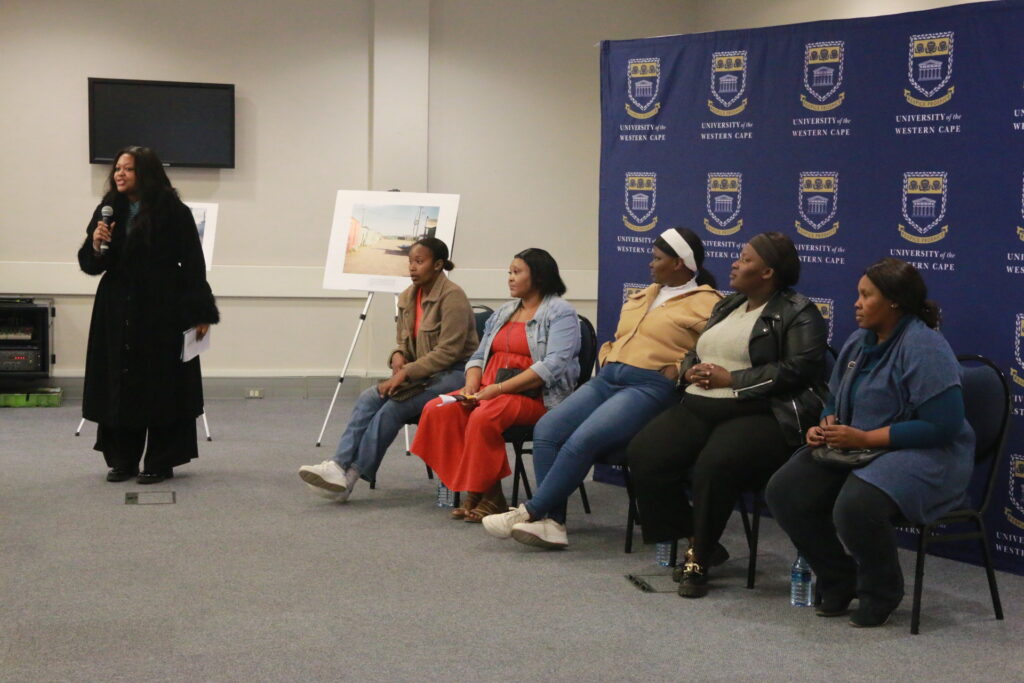
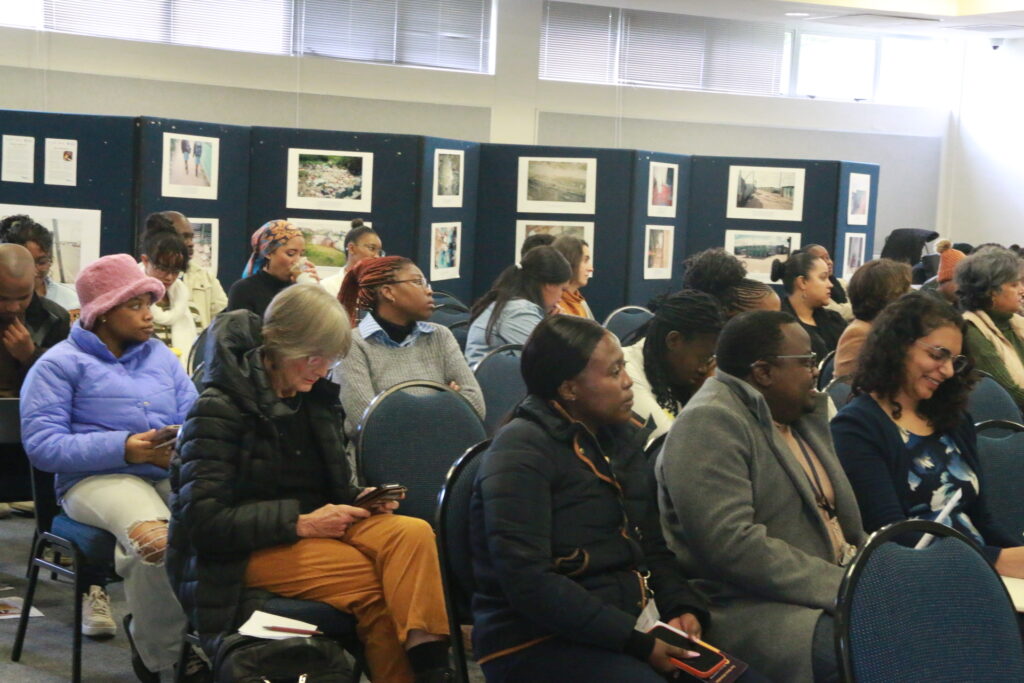
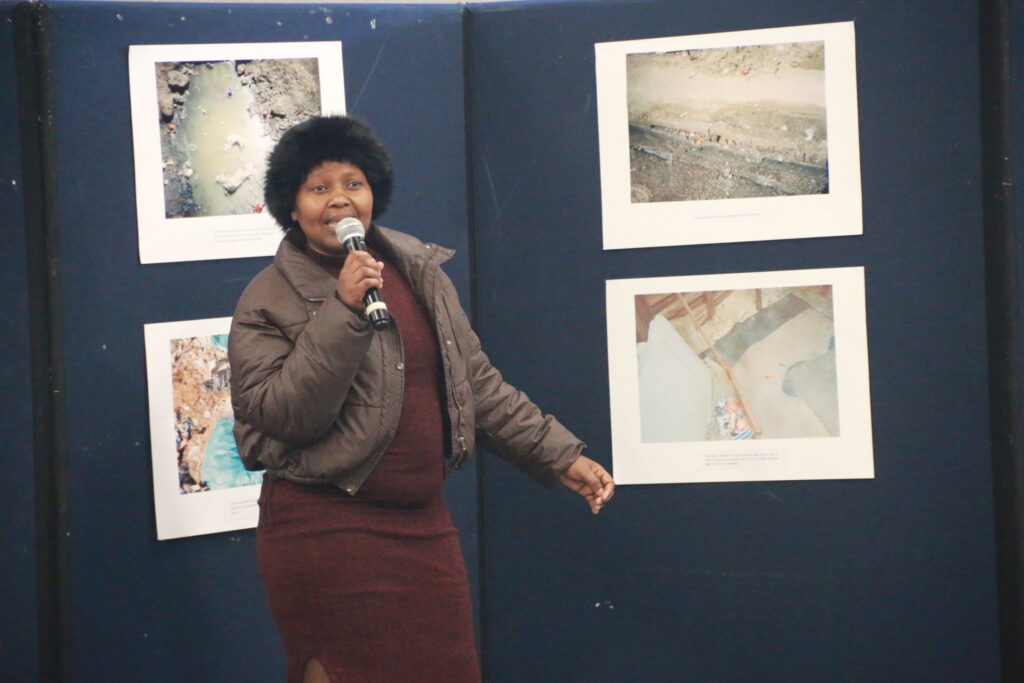
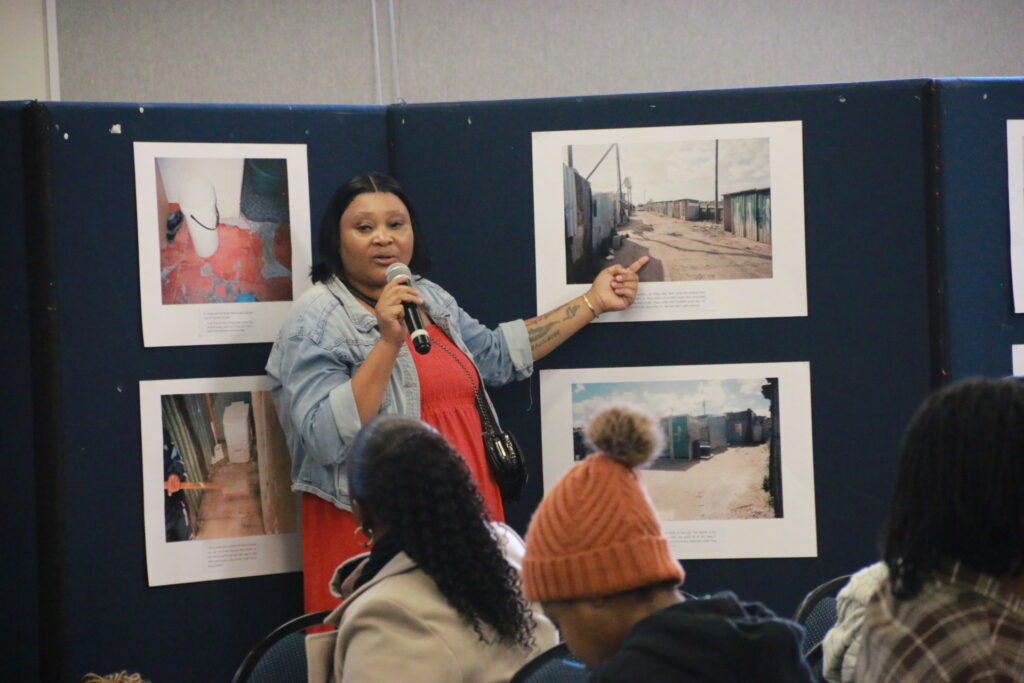
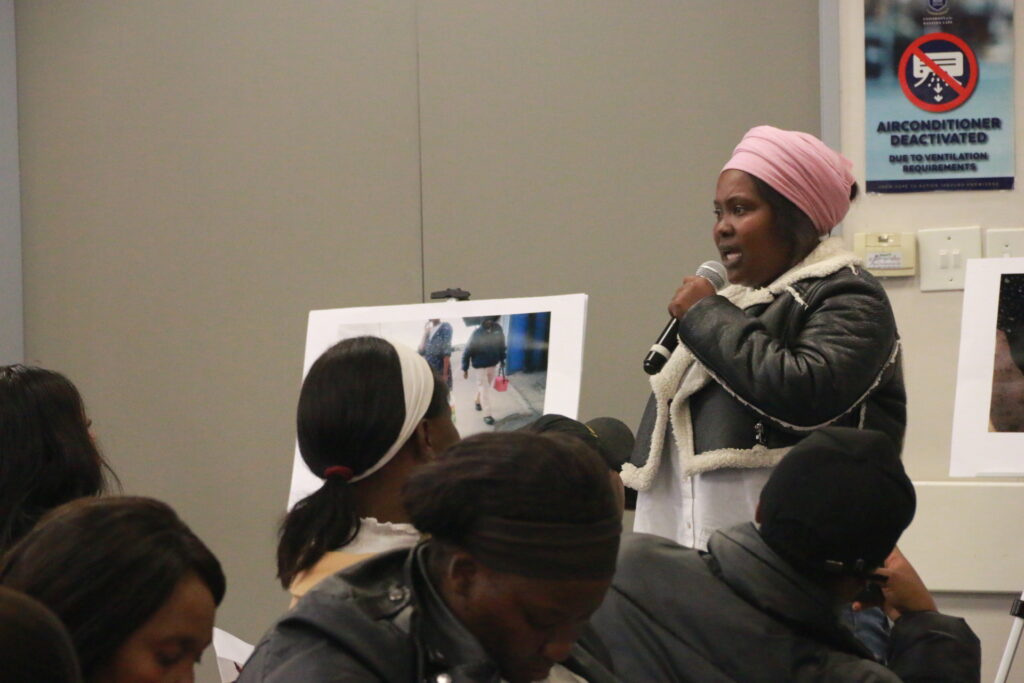
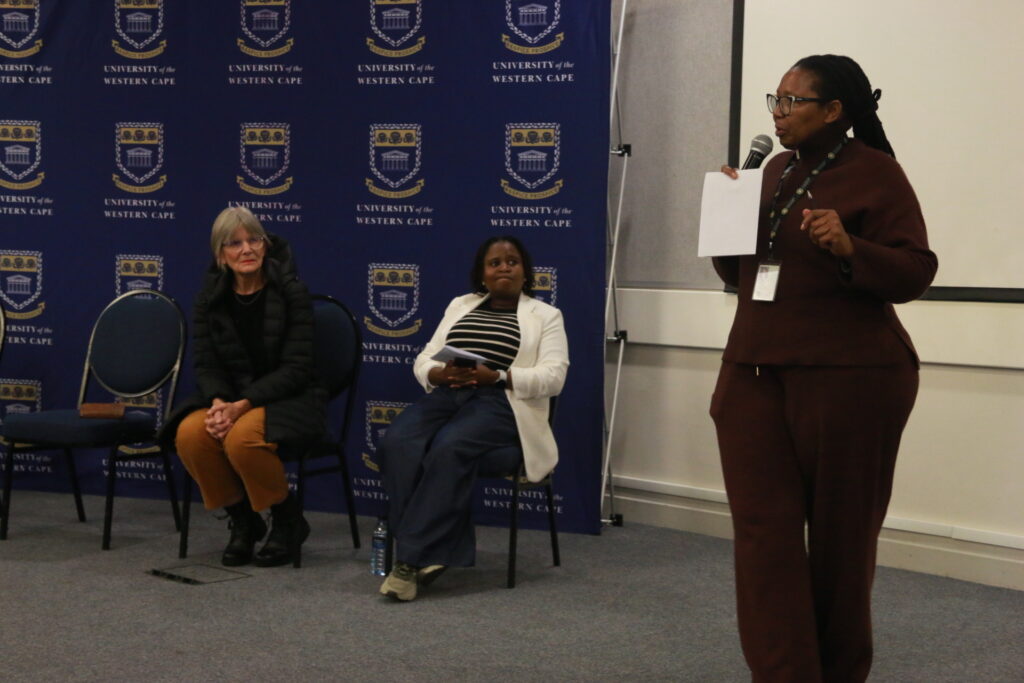
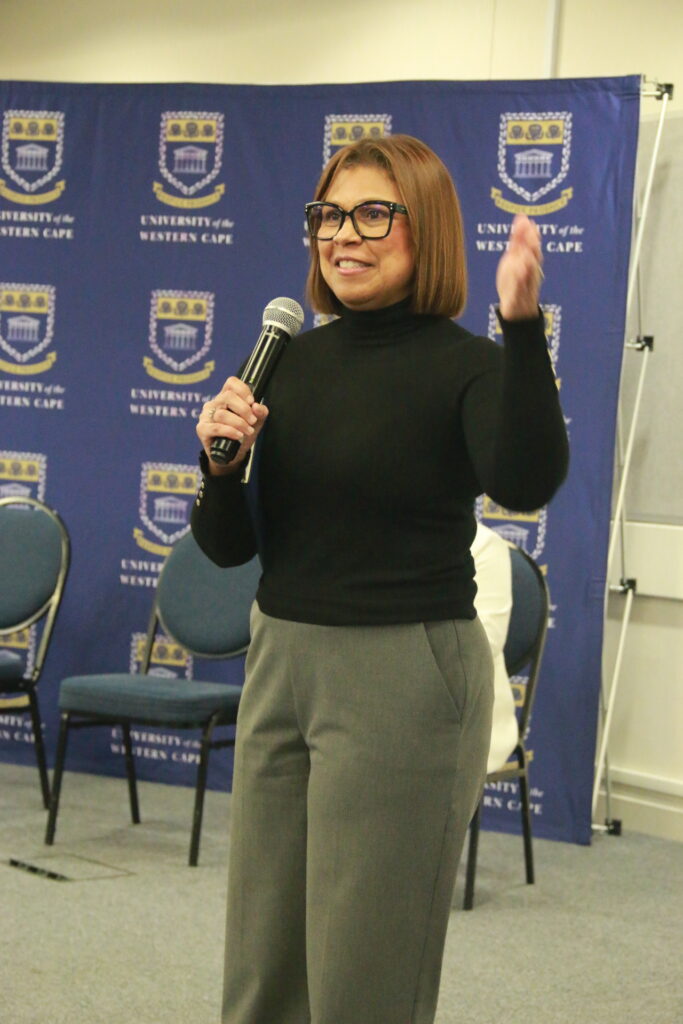
On 28 May 2026, World Menstrual Hygiene Day, the Caring for the Other Half project hosted a PhotoVoice exhibition. The exhibition presented the photographs and stories of women from Khayelitsha on their experiences and challenges around managing menstruation.
In late 2025, we worked with 15 women in Khayelitsha’s BM section, using PhotoVoice as a method to facilitate participants sharing their lived experiences of managing menstruation in informal settlement contexts where water, sanitation and solid waste services are inadequate. PhotoVoice uses photography to document lived experiences. The exhibition provided an opportunity for participants’ photographs to be displayed publicly and was a platform for them to share their stories with a range of stakeholders including government officials, academics, community members and NGOs.
The Caring for the other half project, funded by the Matariki Network of Universities, has enabled collaboration between the Politics and Urban Governance Research Group (PUG) at the University of the Western Cape (UWC) and Dr Dani Barrington at the University of Western Australia and Dr Carolyn Prouse at Queen’s University, Canada. This project has explored what factors affect the achievement of multidimensional menstrual health among informal settlement contexts, an under-researched field.
The exhibition, held at UWC’s School of Public Health, was the culmination of this research which has highlighted that women’s coping strategies for managing menstruation in informal contexts are driven by the need for privacy, dignity and safety, often in response to unhygienic shared facilities and stigma. Dr Dani Barrington gave an opening framing presentation on menstrual health and sanitation for the exhibition, which was followed by five participants sharing the stories behind their exhibited photographs. These stories were followed by responses from Unathi Noludwe (Informal Settlements Basic Services Department at the City of Cape Town) and Prof. Catherina Schenck (DSI/NRF/CSIR Chair in Waste & Society at UWC), and an open question and answer session. Prof. Michelle Esau (Dean of UWC’s Faculty of Economic and Management Sciences) provided closing remarks. We are grateful to Sindisa Monakali, Kanyisile Brukwe and Lindelwa Mayinga who supported translation and engagement by participants throughout the research and exhibition.
The images and stories from the 15 participants in Khayelitsha’s BM section have also been compiled into a photo essay that documents their experiences of managing menstruation.
For more information please contact Christina Culwick Fatti [cculwickfatti@uwc.ac.za].