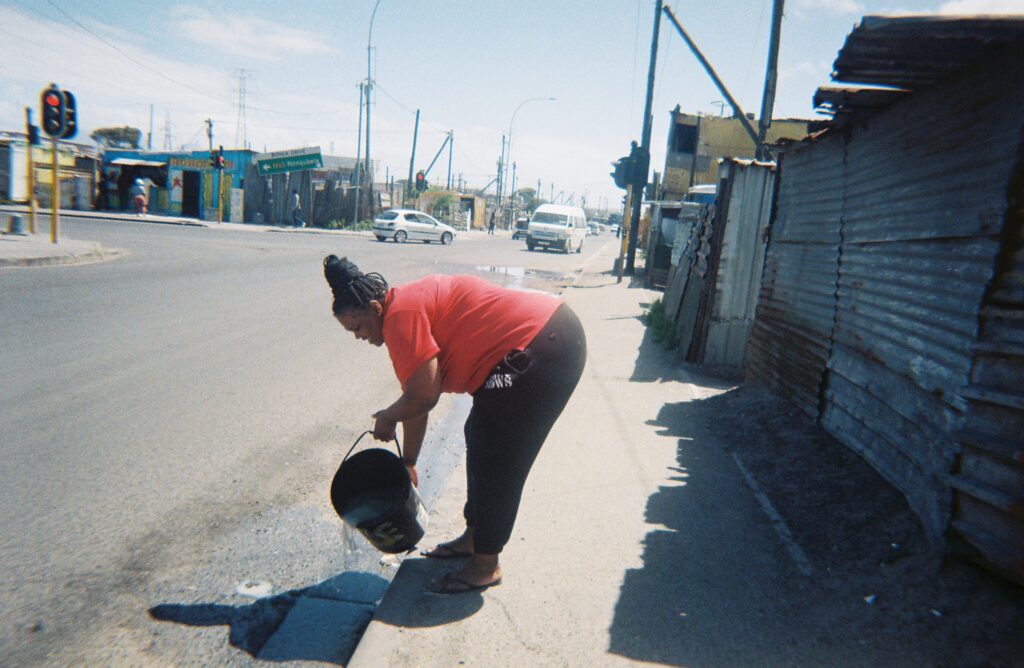
The Caring for the other half project has explored how women in Khayelitsha’s BM Section manage menstruation and how City sanitation and solid waste conditions affect this. The project is funded by the Matariki Network of Universities and is a partnership between PUG, the University of Western Australia and Queen’s University Canada. Conducted in late 2025, this research used interviews and PhotoVoice to understand women’s experiences of menstruation and sanitation. Findings highlight that women’s coping strategies are driven by the need for privacy, dignity, and safety, often in response to unhygienic shared facilities and stigma. Effective policy must be informed by women’s needs.
The research highlights the urgent need to improve menstrual waste services, sanitation, and education in informal settlements in Cape Town. While menstrual health is recognised as a human right, women and girls often lack access to safe, private spaces to wash, change, and dispose of menstrual materials, as well as the social support needed to do so with dignity. The findings show how daily menstrual practices are shaped by limited infrastructure, safety concerns, stigma, and inadequate waste management. Participants emphasised the need for practical improvements such as private, secure bins, safer sanitation facilities, and better disposal options, alongside education for both women and men to reduce stigma and improve menstrual literacy. These insights underline that effective policy must move beyond products alone to address the broader social and infrastructural conditions that shape menstrual health.