

The Governing the Just Urban Transition (GoJUT) project has been awarded an NRF-grant under the Global Change Social Sciences Research Programme (2024-2026), to explore the governance considerations of a just urban transition in South Africa. The project is led by the Politics and Urban Governance (PUG) Research Group, and includes local partners from the Gauteng City-Region Observatory (GCRO) and international partners from the University of Cambridge, Cardiff University and the University of Sheffield.
The project is focused on the context where working towards a just urban transition in South Africa is complicated by the fact that many South Africans are already living in crisis. Those who live on the economic margins are vulnerable to “everyday crises” as they struggle to make ends meet. To find an effective and inclusive path forward, we must gain a nuanced understanding of people’s existing coping strategies and the political landscape on which they are built. Small business enterprises in low-income areas have the potential to create economic opportunities within areas with critical needs, but are especially vulnerable to infrastructure and service interruptions and resource limits.
The project is based on the premise that a just urban transition will require co-production among multiple actors including policy makers, businesses and communities. However, we lack an understanding of the de facto governance through which cities currently operate, especially in low-income areas. Our interdisciplinary project focuses on the coping strategies that three types of businesses in low-income areas of Johannesburg and Cape Town use to secure water and energy. By studying negotiated access to water and energy, the project aims to better understand the opportunities for co-produced paths out of crisis towards an equitable, sustainable urban future.
The GoJUT project adopts a transdisciplinary research approach, using both qualitative and quantitative methods. The project will draw on semi-structured interviews, participant observation, overt shadowing, PhotoVoice, Surveys, and collaborative Policy Hub discussions with government stakeholders and decision-makers.
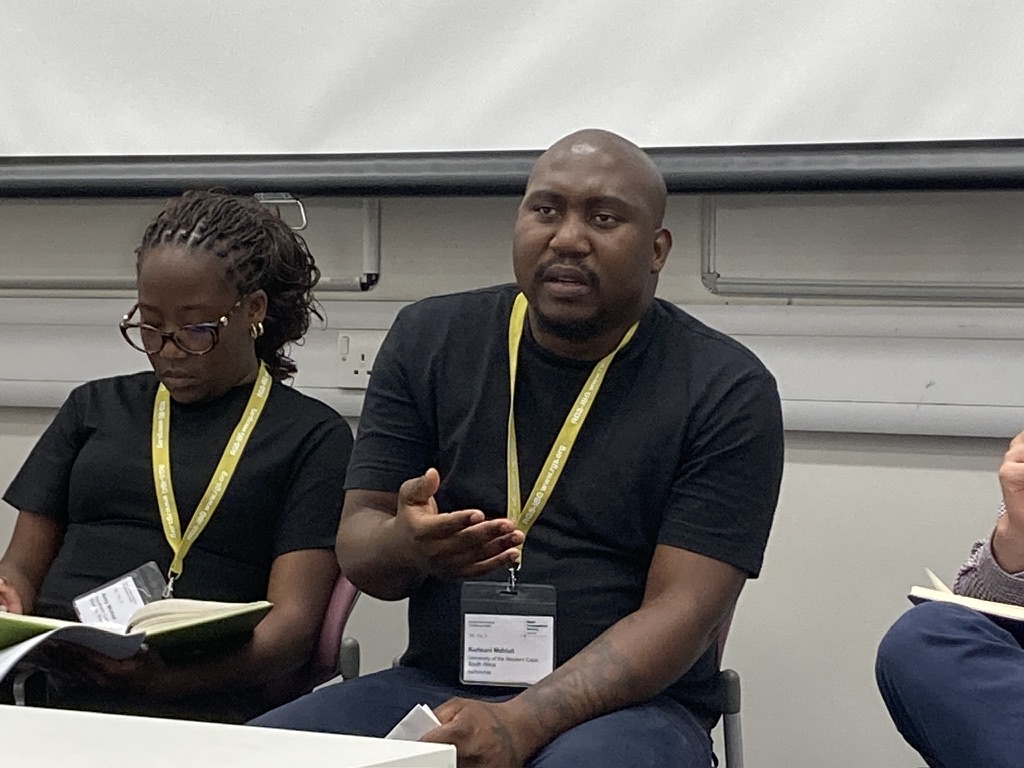
The PUG team attended the Royal Geographical Society (RGS-IBG) Annual International Conference in London from 1–4 September, contributing to the conference through two hosted sessions and 10 presentations.
The team co-convened the double session “Just Urban Transitions: Geographies of Inequalities and Governance Pathways to Sustainable Futures”, bringing together researchers working on the uneven and contested nature of urban sustainability transitions. The session explored how inequality, governance and justice shape pathways towards more sustainable urban futures, with contributions from cities across the Global South.
The team also hosted a session on “Climate Apartheid: Meanings, Contexts, Politics, Legitimacy”, providing a space to interrogate the emerging concept of climate apartheid and its conceptual and empirical development, political implications and manifestations in practice.
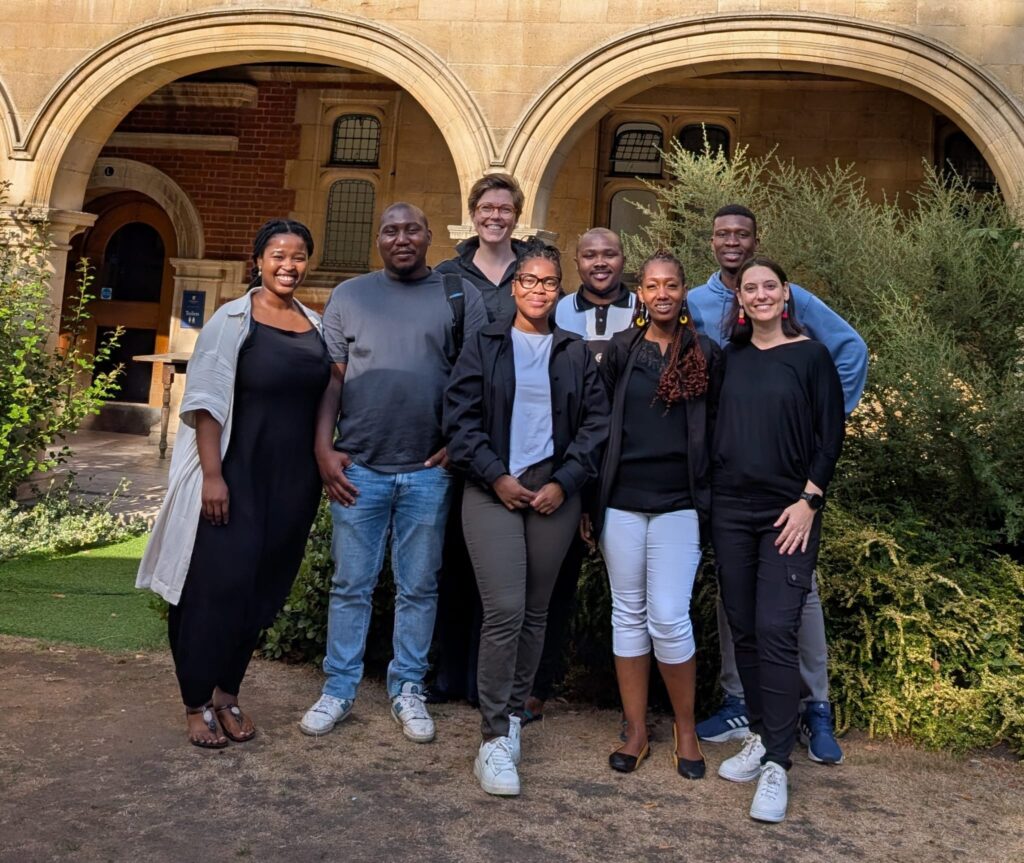
The GoJUT team came together at the University of Cambridge from 25–28 August 2026 for a writing workshop at Sidney Sussex College, hosted by Prof Charlotte Lemanski. The workshop provided dedicated time for the team to reflect on the project’s key findings and contributions, develop papers for publication, and work collaboratively across the team. Sessions covered the writing process and how to get published, alongside individual writing time, group feedback sessions on draft papers, and co-authored paper discussion groups. These sessions provided space to develop ideas, plan papers and work collaboratively on the project’s emerging publications.
We recently closed a call for abstracts for a proposed special journal issue, Interrogating Just Urban Transitions: Governance and Precarity in Southern African Cities. The special issue will explore how governance shapes just urban transitions across Southern African cities, with a focus on equity, infrastructure, and climate-related change. Contributions investigate how just urban transitions are co-produced, governed, contested, and lived across diverse urban geographies.
On 12 March 2026, the GoJUT project hosted the Photovoice Stories of Water and Energy exhibition at Isivivana Centre in Khayelitsha, Cape Town. This interactive exhibition showcased small business owners from Khayelitsha, who presented their photographic stories
of how they are navigating ongoing water and energy challenges to an audience of policymakers, practitioners, researchers, and community representatives. The exhibition was opened by UWC’s Rector/Vice-Chancellor, Prof. Robert Balfour, and the Executive Mayor of the City of Cape Town, Geordin Hill-Lewis presented closing remarks. Find out more here.
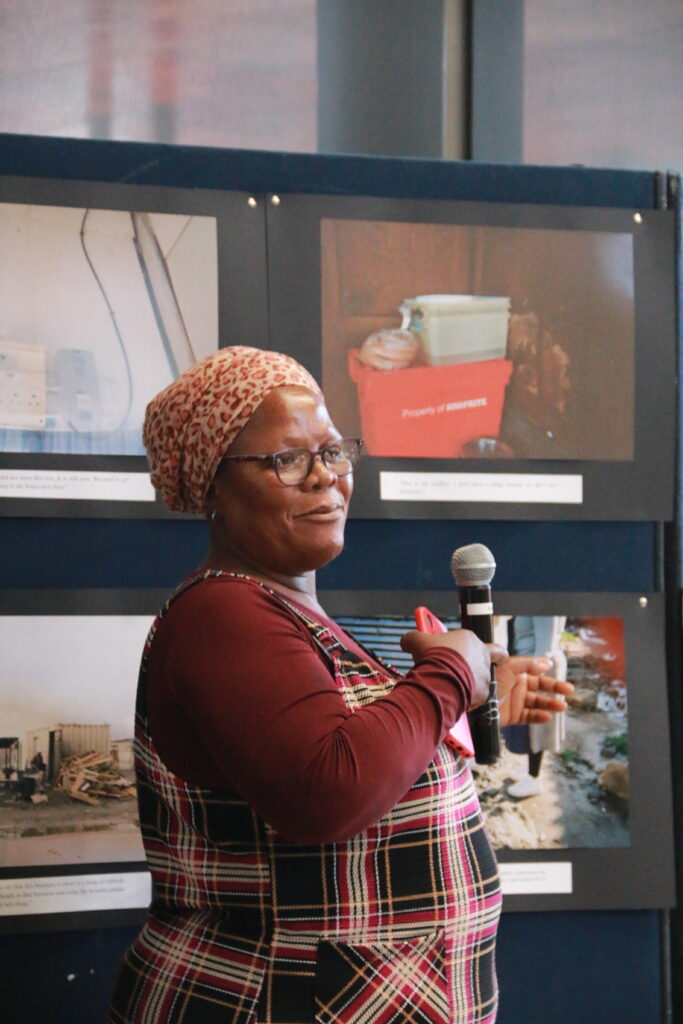
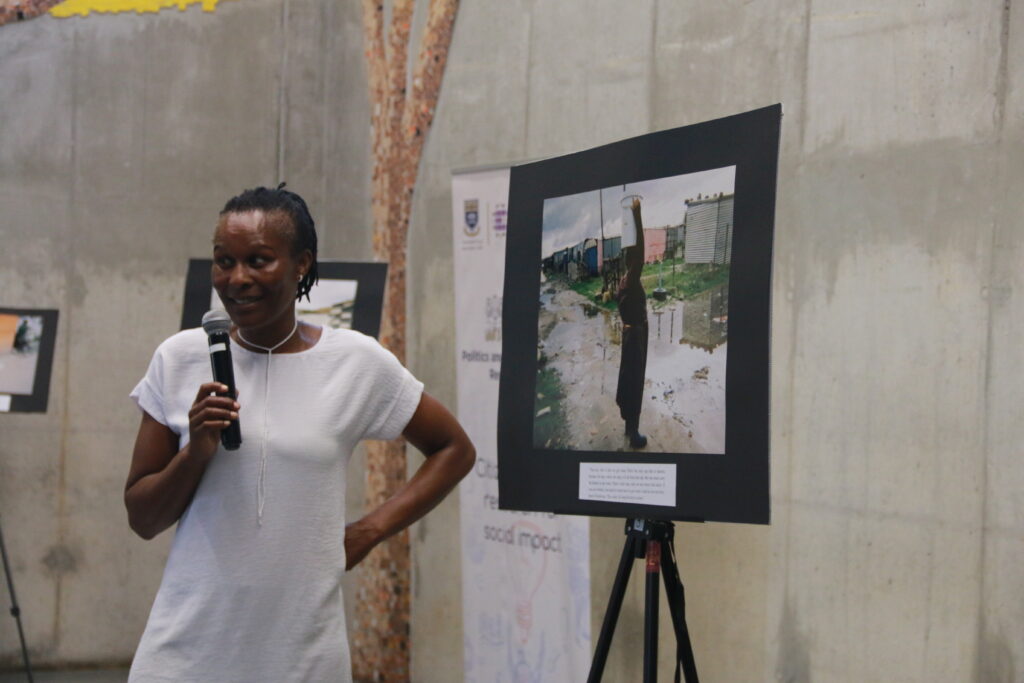
Participants presenting their photos and stories at the exhibition in Khayelitsha.
On 28 October, the project hosted a Photovoice exhibition at the City Forum event in Johannesburg, which was co-hosted with Wits University’s Center for Urbanism and Built Environment (CUBES) KelvinAlexandra-Frankenwald City Studio. GoJUT research participants from Setswetla, Alexandra, shared their photovoice stories about how their businesses in the informal settlement use and access water and energy.
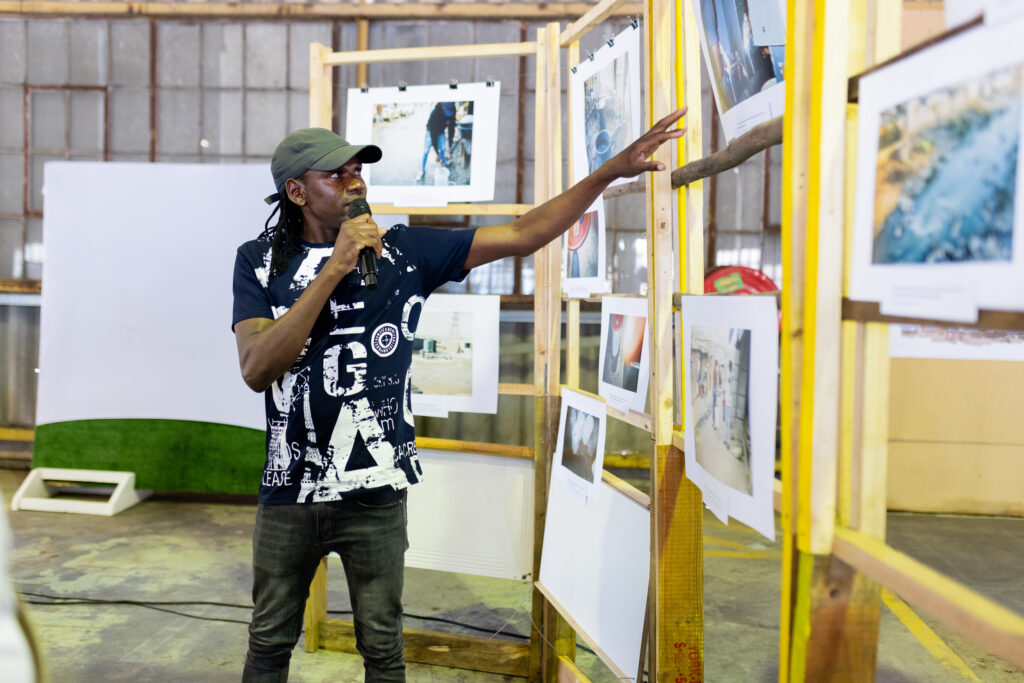
Participant telling the story behind his photos about his business.
The Governing the Just Urban Transition project, led by PUG, hosted a double session at the 10th European Conference on African Studies (ECAS), held from 25–28 June 2025, in Prague, Czech Republic. The session, titled Just Urban Transitions: Governance and Citizenship in African Cities, was facilitated by Fiona Anciano. It explored and critically examined the concept of “Just Transitions,” raising key questions: Who or what is the transition for? Who drives it, and how? And who bears the costs? Fiona Anciano and Christina Culwick Fatti co-authored a paper presented in the session by Charlotte Lemanski, titled Climate Apartheid? The Contradictory Impacts of Private Solar Investments for Governing South Africa’s Just Urban Transition. In addition, Fiona Anciano presented a paper co-authored with SJ Cooper-Knock on Informal Representation and the Democratic Potential of South African ‘Amakomiti’ in a separate session on Decolonisation in South Africa.
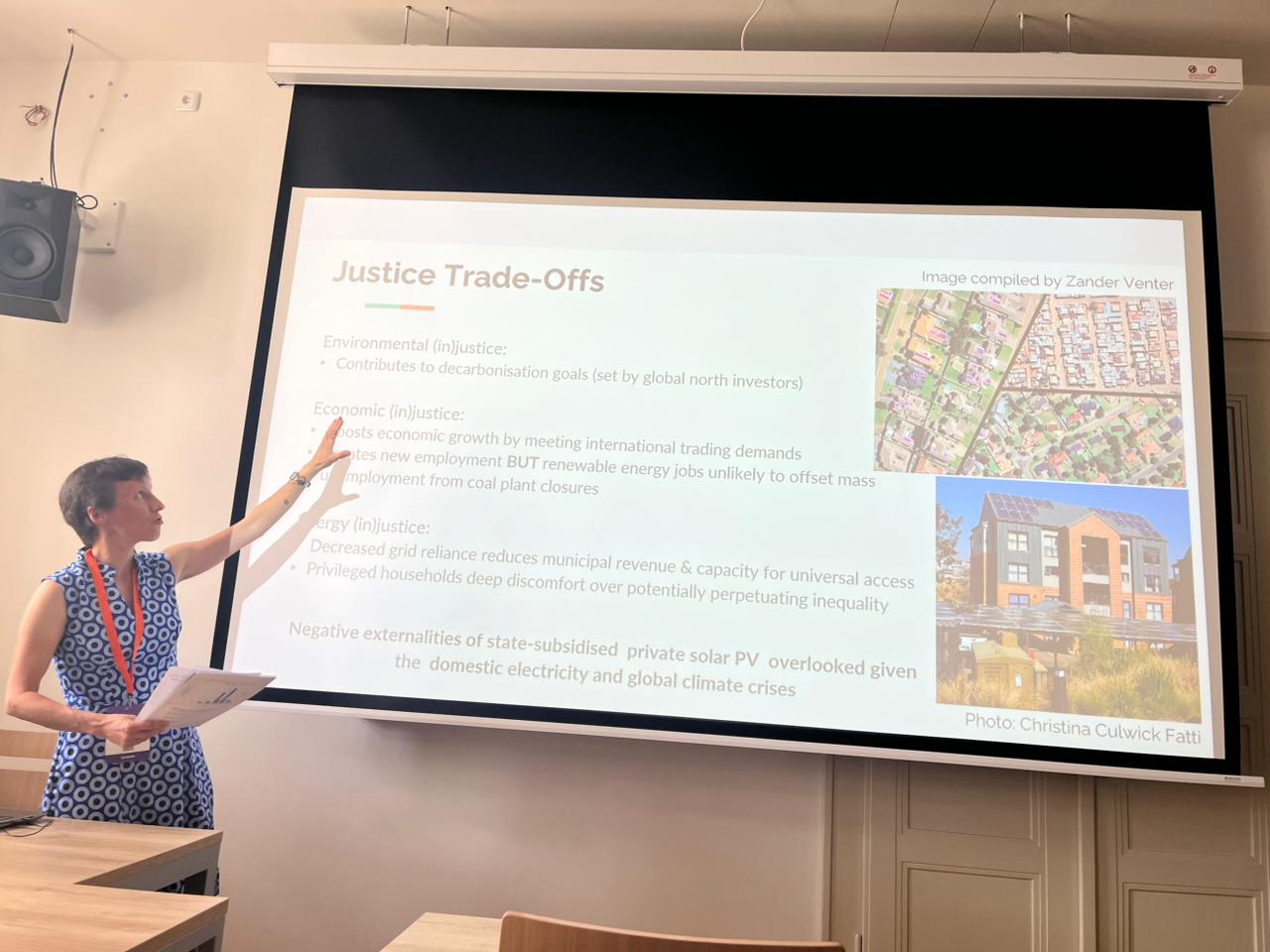
Prof. Charlotte Lemanski presenting in the GoJUT panel at ECAS 2025.
In April 2025, the GoJUT team met at UWC for a workshop. Team members had the opportunity to present their individual projects and receive feedback. The workshop also provided space to discuss key theoretical debates related to the project, along with training in fieldwork, data analysis and writing. The team spent an afternoon in Khayelitsha, engaging with on-the-ground issues around access to basic services and speaking with the owner of a small hardware enterprise. The workshop helped individuals situate their research within the broader project, offered valuable training for the team’s postgraduate students, and created space to share strategies for time management, writing and publishing.
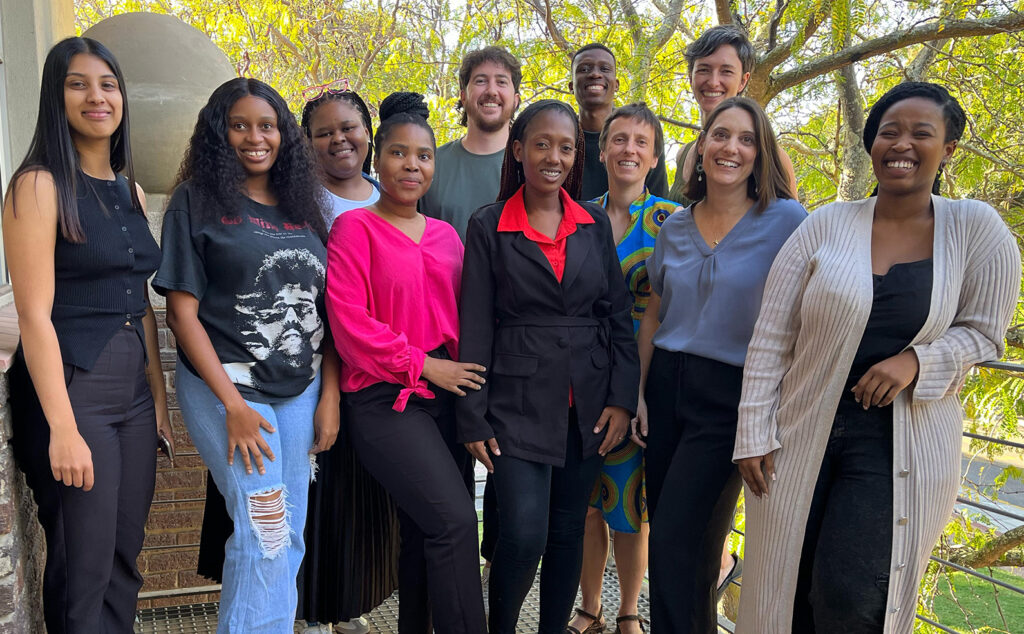
April 2025 workshop participants (L to R): Rogini Naidoo, Asemahle Mahlungwana, Sbahle Cele, Samkelisiwe Khanyile, James Clacherty, Mamokete Modiba, Motshwaedi Sepeng, Charlotte Lemanski, Christina Culwick Fatti, Fiona Anciano, Boitumelo Papane.
Mdhluli, K. & Naidoo, R., A. (2026). What does leadership in informal urban settings look like in the context of just urban transitions?
Mdhluli, K., Naidoo, R. & Mahlungwana, A. (2026). When research meets reality: The challenges of conducting fieldwork in Khayelitsha amid violence and extortion.
Anciano, F., & Culwick Fatti, C. (2024). Unequal Energy Transitions: The impact of private solar adoption on social justice in South African cities. International Institute for Sustainable Development.
Just Urban Transitions: Governance and Citizenship in African Cities panel at the 10th European Conference on African Studies (ECAS). 25–28 June 2025. Prague, Czech Republic. (link)
Team research methods and fieldwork workshop. 22-25 April 2025. UWC, Cape Town.
